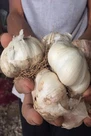
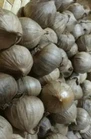
As the world's largest garlic producing country, China's garlic industry development is far ahead of other countries.
Recently, there have been rumors that garlic production in China has suffered significant losses due to white rot disease.
In addition, there are reports that importers are closely monitoring the import flow from China and importing more garlic from other countries to avoid potential losses caused by this issue, but the international market response is relatively calm.
Argentine growers are working hard to maintain their position in the world market, as there is a risk of losing competitiveness due to high costs and competition from other countries.
The Israeli import quota allows imports when garlic prices are too high, which has caused frustration among local growers.
Spanish growers are expected to have a good production season and have noticed that European importers are turning to importing garlic from Spain as a precautionary measure.
There have been reports that the Chinese garlic industry has suffered huge losses, leading to market turbulence in recent weeks. It is rumored that Chinese growers may lose 50% to 80% of their harvest due to a root disease.
This is not the first time China has released such information in an attempt to shape the global garlic market. An Italian trader said, "It's unlikely there will be such a big loss all at once, it's more like an attempt to influence the market."
The value of the garlic market has shown an unstable pattern in recent years, with years of growth alternating with sudden declines. However, according to a recent report by Indexbox, garlic consumption increased by 3.2% annually from 2006 to 2016, reaching 26.5 million tons in 2016. The report also states that consumption will further increase to 31.1 million tons by 2030.
India and Bangladesh had the largest increase in production in 2016, with 6.5% and 7.4% respectively. The top garlic producing countries in the world are China, India, Bangladesh, and Egypt, with China alone accounting for 75% of global production. The largest garlic importing countries in 2016 were Indonesia, Brazil, Malaysia, and the United States.
China: Unclear reports on the new garlic production season
China's garlic production has reached its peak in the past two years, reflected in the global price decline.
The new season garlic produced in Shandong, the largest production area in China, will enter the market in mid May. According to local media reports, due to the need to clear cold storage to store new harvests, the local price of garlic is relatively low, only around $0.60 per kilogram, so the export volume will reach its peak. The prospect of garlic still in the field is not yet clear.
Some people believe that the cold storage is still filled with the harvest from the previous season, and this year's new harvest may be equivalent to or even higher than last year's level.
In addition, there are rumors that white rot - a disease that infects plant roots - is rampant in farmland in Jinxiang County, Shandong Province, and some growers are concerned that it may result in losses of up to 60% of their harvest, which may push up export prices. The rumor has not been confirmed by local media or industry associations.
Smuggling Chinese garlic to disrupt the Bolivian market
Chinese garlic smuggled into Bolivia is disrupting this market. This type of garlic is 40% cheaper than domestic garlic, which has a negative impact on Bolivian growers. A trader recalled that Chinese garlic first entered the country four years ago. "They look good, but they don't have a taste," he said. The only reason they can be sold is the price.
Although Chinese garlic can be supplied year-round, it is mainly sold to Bolivia during the winter, and there is no production in the Tarja and Cochabamba regions at that time. The country also imports garlic from Peru, but traders claim the quantity is relatively low. Peruvian garlic also mainly enters the market in winter.
Argentine garlic industry strives to maintain its position
Argentina can grow garlic nationwide, with approximately 1500 growers in the Mendoza region, of which three-quarters have a planting area of less than 15 hectares, and the export season is from October to September.
According to a trader, this year's garlic prices are just enough to achieve breakeven, with most of the products being exported to retain these markets. Argentina is the third largest garlic producing country in the world, second only to China and Spain. A trader predicts that India will surpass Argentina to become the world's third-largest garlic producing country in the coming years.
Argentine growers are trying to cut costs to gain competitiveness in the world market. According to a trader, the current garlic season is facing difficulties due to fierce global market competition and low prices in domestic and international markets. "Spain has become an important competitor for us," the grower said. Competition first appeared in Northern Europe, but now it has spread to the United States, Asian markets, and Brazil. Since the beginning of this year, the Colombian market has also begun to open to Argentine garlic.
Israeli growers are disappointed with imports
The situation in the Israeli market is usually very stable because the entire garlic production is sold in the local market, and annual demand is easily predictable. Due to the short production season and the fact that garlic can be grown throughout the country, market shortages are quite rare, so prices remain stable, ranging from 1.50 to 2.50 euros per kilogram.
In recent years, the Israeli government has begun to allow garlic imports to lower consumer prices. At certain times of the year, when garlic prices are high, garlic is imported from abroad, which has the expected impact on prices. However, local growers feel frustrated about this. The activities of persuading consumers to purchase local products have almost no impact on promoting consumption.
Spanish garlic industry benefits from Chinese garlic rumors
The new garlic season will start around 15 days in Cordoba, with good prospects, but due to cloudy weather, the expected yield per unit is slightly lower. The rainfall in March had a positive impact as growers did not need to irrigate crops. Unlike last year, this season's sales start from last year's inventory.
Chinese garlic and Spanish garlic compete in price, but a trader said that due to rumors of white rot affecting Chinese output, some European importers have chosen Spanish garlic. The garlic cultivation area in Spain has remained stable, although in some regions, the cultivation area in Castile La Mancha has decreased by 1.2% due to drought, while the cultivation area in Andalusia and Castile Le ó n has increased. Last year's garlic production
Italy: Low prices reflect market conditions
The reports of supply shortages in China have not had an impact on Italy, and traders remain calm and see the rumors as an attempt by China to shape the market.
A trader claimed that importing garlic from Latin America this spring has caused significant problems. The trader explained, "It's hard to say how much garlic inventory there is in China, but if there is a shortage, it would be beneficial for European producers." Growers in the United States, Mexico, and South America can also take advantage of China's shortage. According to the importer, the price of garlic reflects market conditions - sluggish and unsatisfactory.
Spanish garlic replaces Chinese garlic in the German retail industry
The garlic currently sold in the German retail industry mainly comes from Egypt, China, and Spain. It is expected that the first batch of Spanish garlic in the new season will enter the German market in the first week of May, and it is still possible to sell aged garlic before that. It is expected that the Spanish garlic harvested in the previous season will be almost sold out by then.
Garlic prices are lower than the average level throughout the year, especially in China, but there may be significant differences depending on the variety. Although the price of Chinese garlic is still considered a reference for the rest of the world, European production regions are gradually achieving success. For example, spring and purple varieties from Spain are increasingly appearing in the German retail market, which is unfavorable for white garlic. However, discount merchants still generally prefer cheap white varieties from China because they are priced lower.
In addition, the demand for black garlic and smoked garlic has slightly increased. Traders believe that the interest of German consumers in garlic has significantly increased in the past decade, which means that the per capita consumption of garlic has increased, and regional cultivation has emerged in areas such as Pfalz and the lower Rhine River.
French garlic inventory has been depleted
A spokesperson for a grower's cooperative said that France has been out of garlic inventory for one or two months. At present, the garlic on the shelves mainly comes from Spain and Argentina. It is expected that France's output will be listed again in late July/early August. There is a good demand for garlic.
Netherlands: There is a large amount of Chinese garlic in cold storage
Importers have stated that there is still a large amount of Chinese garlic inventory in the cold storage. Since the beginning of this year, garlic has become cheaper, and this trend will continue until the product is sold out. The quality is still good, but due to sales delays, more batches need to be sold.
In mid May, China will begin a new garlic season, and new garlic will be transported to Europe again in the summer. Importers are surprised by the prices in China, but also know that this market is no longer in the hands of growers, but in the hands of speculators.
US: Regular garlic prices under pressure, organic garlic prices rising
At present, there is a large amount of Chinese garlic in the Los Angeles market, and one trader described the current situation as oversupply. A trader said that in addition to Chinese garlic, the United States also imports garlic from Argentina, "although the production there has not been very good this year." This year, the demand for Argentine garlic has been disappointing. In addition to garlic from these distant producing countries, there is also local production in the US market. There is California garlic on the market, and the garlic season in neighboring Mexico will also begin soon. "The prospects for California garlic are very good, and customers do not need to switch to Argentine garlic," the trader said.
Last year's supply was relatively low, and this year's supply may increase by 20-30%, while the situation for organic garlic is vastly different, with a slightly lower supply compared to last year. The Argentine garlic season has ended, and the first batch of purple Baha garlic is arriving at the market from Mexico. Due to the large supply of cheap Chinese garlic, garlic prices are low.
According to a trader, Argentine garlic is almost unprofitable, which is a result of a shortage of garlic in China a few years ago. At that time, the amount of garlic imported from other countries increased, and now China's garlic production has returned to normal, while the amount of imports from these countries has not decreased. In terms of price, the price of organic garlic has increased by about 10% compared to last year, but it is expected that the launch of Mexican white garlic in early June may lead to a rapid decline in price.