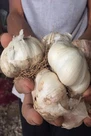
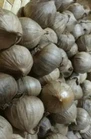
In recent years, China garlic export situation has been getting better and better, and the international reputation of Chinese garlic has also been increasing. According to statistics, China garlic production accounts for more than 70% of the world's total production. China garlic is mainly exported to Indonesia, Vietnam, Malaysia, the United States, Brazil, Japan, Thailand, South Korea, Bangladesh and other countries.
1. When exporting garlic, you need to pay attention to whether there are trade barriers in the destination country.
In the international garlic market, garlic trade barriers in previous years were mainly high tariffs, licenses, quota systems, etc. In recent years, new restrictive measures have been anti-dumping investigations, technical barrier quarantine certificates, etc.
The United States, Canada, Brazil, and South Africa have successively implemented anti-dumping investigations on Chinese garlic. South Korea has strictly restricted the export quantity of China garlic; the European Union, India and Thailand have imposed import quota restrictions on Chinese garlic.
These trade barriers have limited the quantity of my country's garlic exports, increasing the pressure on garlic exports and the difficulty of developing international markets.
In order to respond to anti-dumping and avoid unfair competition among enterprises. All major garlic producing areas should continue to improve the role of garlic industry associations and strictly abide by the minimum price regulations for garlic exports. Implement industry self-discipline and avoid vicious competition. Secondly, relevant export traders should be assisted to establish a complete consultation and negotiation system to ensure more exports and increase income at the same time.
2. When exporting garlic, China garlic supplier need to pay attention to whether the pesticide content and heavy metal content exceed the standards? Pre-export inspection and quarantine work is essential.
Some countries require that China garlic must be irradiated before customs clearance when imported to relevant countries. The purpose of irradiation is to kill insect eggs and other organisms carried by the garlic itself. Fumigation and disinfection before export is an essential step!
Most garlic cultivation in my country uses farmyard manure and organic fertilizer, while relatively little use of inorganic fertilizers and light pesticide usage. In addition, labor costs are much lower than abroad, which gives my country's garlic an innate competitive advantage in the international arena.
Therefore, China garlic should pay attention to the development of pollution-free and low-residue aspects. This is the trend of the times. Garlic importers are most afraid of death and have very strict requirements for low residue!
Currently, 23 countries or regions, including Australia and India, have put forward special quarantine requirements for China garlic, and nearly 48 countries or regions have officials or importers put forward fumigation requirements, which increases the company's testing costs and product return risks. Foreign technology trade Measures have become one of the factors hindering exports.
3. The quality of garlic exports must be controlled. The quality and safety of agricultural products is the key to avoid returns due to quality problems.
For example: In 2014, a batch of garlic exported to South Korea from Lanling County, Shandong Province was returned, causing garlic farmers to suffer huge losses. So, what is the reason for the return?
The 2,200 tons of garlic returned by South Korea were produced in Lanling County, Shandong Province, the "Hometown of Garlic in China". Lanling County is a high-quality garlic producing area in my country, and the batch of garlic exported to South Korea is the best of the best. Even the best quality garlic in China is still forced to be returned because of substandard quality.
After conducting quality inspections, the Korean Agricultural Management Office determined that "key garlic exceeded the standard and required the goods to be returned." "Key garlic" refers to garlic that is damaged by diseases and insect pests, has wounds, is in bad shape, is moldy, or is rotten.
It turns out that South Korea imported garlic from Lanling County through a tender, and the tender required that "garlic with serious defects should account for less than 5% of all garlic." During random inspections by the Korea Agricultural Management Bureau, more than 5% of the garlic was found to have "serious defects". At that time, there was no concept of "garlic with serious defects" in China. A similar concept was "garlic with defects". For example, for first-class and special-class vegetables, the proportion of "defects" could not exceed 1%.
Now all major garlic producing areas have established export safety demonstration zones, which will help improve the quality of garlic exports!
4. Attention should be paid to relevant technical protection work.
Because we did not have relevant self-protection measures in the past few years, our country's garlic was used as seeds for domestic cultivation in many other countries. Now South Korea, Ukraine, Chile and other countries are using large quantities of Chinese garlic as seeds.
Exported garlic must be fumigation. On the one hand, garlic fumigation can kill the eggs remaining on the garlic