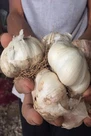
Garlic, introduced to China through the Silk Road route by Zhang Qian during the Western Han Dynasty, was given the nickname Hu garlic. Its cultivation history has exceeded two thousand years.
It has strong adaptability and a wide range of uses. It can be used not only for raw food, but also for frying and cooking, with strong pairing properties.
In recent years, with the increase in garlic consumption, the planting area in China has been expanding, and the economic benefits have become increasingly significant.
Although the area has increased, some garlic planting groups have deeply rooted traditional planting concepts, and even only know how to apply urea during the greening period and manage rough branches and leaves, resulting in unsatisfactory results.
Grass pest control
Garlic has a long seedling period, and the garlic leaves are narrow and thin, making it difficult to cover effectively. As the temperature warms up, some weeds quickly occupy the garlic field space.
Moreover, garlic fields have a rich variety of weed types, such as grasses, broad-leaved grasses, and sedges, with a large number of seedlings emerging in batches. Especially in the Asteraceae and Caryophyllaceae families, it is difficult to eliminate plants and roots.
Therefore, during the green period of garlic, if weeds are found in the field, it is necessary to take advantage of the fact that the wings are not yet full and the roots are thin and the plants are weak, and actively take various measures to suppress the expansion of the grass population.
Firstly, utilize the sharp edge of intercropping and weeding. The garlic planting area is not large, and the cost of manual weeding is low, so there is no need to purchase herbicides separately. Intertillage weeding is more affordable and effective, and can quickly eliminate weeds and roots.
Secondly, use chemical herbicides. Herbicides are effective measures for weeding garlic fields, suitable for large-scale garlic fields. They should be selected with low toxicity, no residue, safety, economy, and a wide spectrum of herbicides that can simultaneously eliminate various types of weeds.
Finally, herbicides should be used in a standardized manner. Medications should be rotated or mixed, otherwise weeds are prone to resistance; Keep and use according to the instructions, otherwise it may cause drug damage and even volatilize and become ineffective; Wear protective gear as herbicides can harm your health.
Graded management
Due to differences in field management, water and fertilizer management, and climate, the condition of garlic seedlings varies after greening. Based on the condition of garlic seedlings, weak, strong, and vigorous seedlings should be graded and managed to improve quality and efficiency.
Weak seedlings promote strength. The reasons for the weakness of garlic seedlings are complex, such as late sowing time and lack of nutrients, which can cause the plants to be thin and weak, with weak growth, pale green leaves, and withered yellow and green leaves at the bottom.
If you want the weak seedlings to grow stronger, you can fertilize them according to the standard of 30-40 kilograms of ammonium nitrate, 4 kilograms of potassium dihydrogen phosphate, and 2 kilograms of ferrous sulfate per mu. Depending on the recovery situation, foliar fertilizer should be added.
Vigorous seedlings promote strength. Excessive nitrogen fertilizer application and planting density can lead to excessive growth of garlic seedlings, exhibiting the characteristics of rapid growth of garlic hearts and leaves, slender stems and long leaves, vigorous but not strong, and false prosperity.
To promote the growth of garlic seedlings, it is necessary to follow the principle of combining promotion and control. Promotion involves foliar spraying of potassium dihydrogen phosphate twice in a row to supplement phosphorus and potassium elements, while control involves spraying 1-2 times of imidazole to achieve the effect of controlling the growth of garlic at the top and promoting the growth of garlic at the bottom.
Strong seedlings remain stable. The characteristics of strong seedlings are moderate plant height, wide and thick leaves, bright luster, presenting a deep green color, early greening time, and consistent with the developmental characteristics during the greening process.
This type of garlic seedling does not require excessive management. In case of drought, watering management should be carried out appropriately, and 20-30 kilograms of urea or ammonium bicarbonate should be applied with water to ensure stable growth of the seedlings and lay a basic foundation for later plant growth.
Temperature management
Garlic enters the turning green period, with an orderly increase in temperature, but the climate is highly unstable. Influenced by the cold air from the northern plateau to the south, cold weather in spring occasionally occurs.
During this period, it is necessary to pay timely attention to weather forecasts, adjust garlic temperature management measures based on seasonal temperature changes, and prepare for double-sided field temperature management:
Reduce temperature. As the temperature rises, the growth of plants resumes. It is necessary to suspend the insulation and warming measures in autumn and winter, and remove all debris on the plastic film, such as straw, wheat stacks, weeds, etc., to enhance the transparency of the plastic film and promote the greening of garlic.
Failure to clean and cover the insulation layer in a timely manner, resulting in an increase in temperature, weakened respiration of garlic plants, decreased photosynthesis, yellowing and withering of young stems and leaves, and even complete loss of vitality of the entire plant.
Insulation measures. Garlic has strong cold resistance, and when combined with the recovery of plant growth during the greening period, there is no need to panic during cold wave days as long as the temperature drop is not significant.
When encountering strong winds, the rate of plastic film damage is high. If damage occurs, it is necessary to seal it early to achieve insulation effect. If necessary, antifreeze can be purchased and sprayed to effectively control the occurrence of frost damage.
Disease and pest control
Diseases and pests are two obstacles to garlic's greening period. To achieve high yield and quality of garlic, the most important thing is to grasp the key links of disease and pest control.
Disease prevention and control. Common diseases that threaten the growth of garlic include physiological diseases, such as various nutrient deficiencies, infectious diseases, such as garlic gray mold, garlic blight, garlic leaf spot, rust, and dry rot. During the prevention and control process, attention should be paid to:
Before spraying, clarify the symptoms of garlic disease, apply medication accordingly, and do not use medication arbitrarily; During the spraying process, follow the usage standards, wear protective equipment, and ensure accurate dosage, concentration, scientific mixing to avoid drug harm.
Pest control. Common pests that threaten the growth of garlic include garlic maggots, thrips, aphids, leafminer flies, and fleas. The prevention and control methods for different types of pests vary. Taking the prevention and control of garlic maggots during the greening period as an example:
Agricultural prevention and control, garlic maggots prefer moisture and are afraid of dryness. By using this characteristic, spraying grass and wood ash on garlic fields can inhibit the expansion of pest populations, and also provide high-quality potassium fertilizer to promote the healthy growth of garlic plants;
Pesticide prevention and control, spraying pesticides has the fastest and most ideal killing effect. Garlic pesticides such as imidacloprid, thiamethoxam, and thiamethoxam can be used for prevention and control. The specific medication can be adjusted appropriately. It should be noted that the peak period of garlic maggot adults and hatching is the best medication time, and opportunities should be seized.
It should be emphasized that the greening period is a critical period for garlic rejuvenation, and water and fertilizer management, pest and weed control, and temperature management are important footholds. As long as these management can be deeply grasped in the later stages, garlic can easily increase production by 300 pounds.