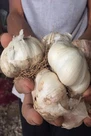
In 113 BC, when Zhang Qian of the Han Dynasty was on a mission to the Western Regions, he brought garlic back to the Central Plains.
According to legend, in the 2nd century AD, Hua Tuo used garlic juice and whine to treat worms in the Eastern Han Dynasty. After Song Dynasty, garlic has been used in medicine.
In the compendium of Materia Medica by Li Shizhen in the Ming Dynasty, it was recorded that garlic can clear the five internal organs, reach the orifices, dispel cold and dampness, ward off evil, eliminate carbuncle and swollen, and dissolve accumultaed food.
During the Middle Ages(476-1453AD), Europe was often shrouded in a climate of fear of epidemics, but many people who ate garlic every day survived and were safe.
In Marseilles, France, the garlic vinegar preparation is called "Four Thieves". According to legend, there are four thieves who specialize in stealing tombs. They take garlic vinegar before stealing to avoid infection. Garlic vinegar thus got such a good name.
In 1722, the epidemic of Marseilles in France caused many people to take garlic vinegar to avoid the infection of the epidemic.
In 1930, France first applied for a patent for a medicinal preparation of garlic.
In 1944, the active ingredients in garlic essential oil were discovered, the garlic's prevention of cardiovascular and cerebrovascular diseases, diabetes and cancer has become the focus of research.
In 19985, the active ingredient of garlic essential oil, known as the gold of medicinal plants, was successfully extracted in Italy, causing a worldwide sensation.
From 1985-2001, garlic was among the top ten foods selected by the American Science Times every year.